Research Shows
And Other Lies Instagram Told Me in Two Hours

I was doomscrolling Instagram while thumbing through stacks of student research—the kind with literature reviews, research gaps, and P-values—when I started noticing all these “studies” popping up on my IG page. And let me tell you something: these headlines made my forehead lines crinkle in surprise and intrigue.
My students need to step it up.
While they’re sweating over their methods and surveys, the internet is curing Alzheimer’s with flatulence.
I spend my days teaching teenagers how to build research questions that don’t collapse under basic scrutiny. We talk about sample size and bias. We discuss what “statistically significant” actually means instead of what it sounds like.
Then I go home, scroll my phone, and learn that a gas released when you fart could protect the brain from Alzheimer’s.
Huh?
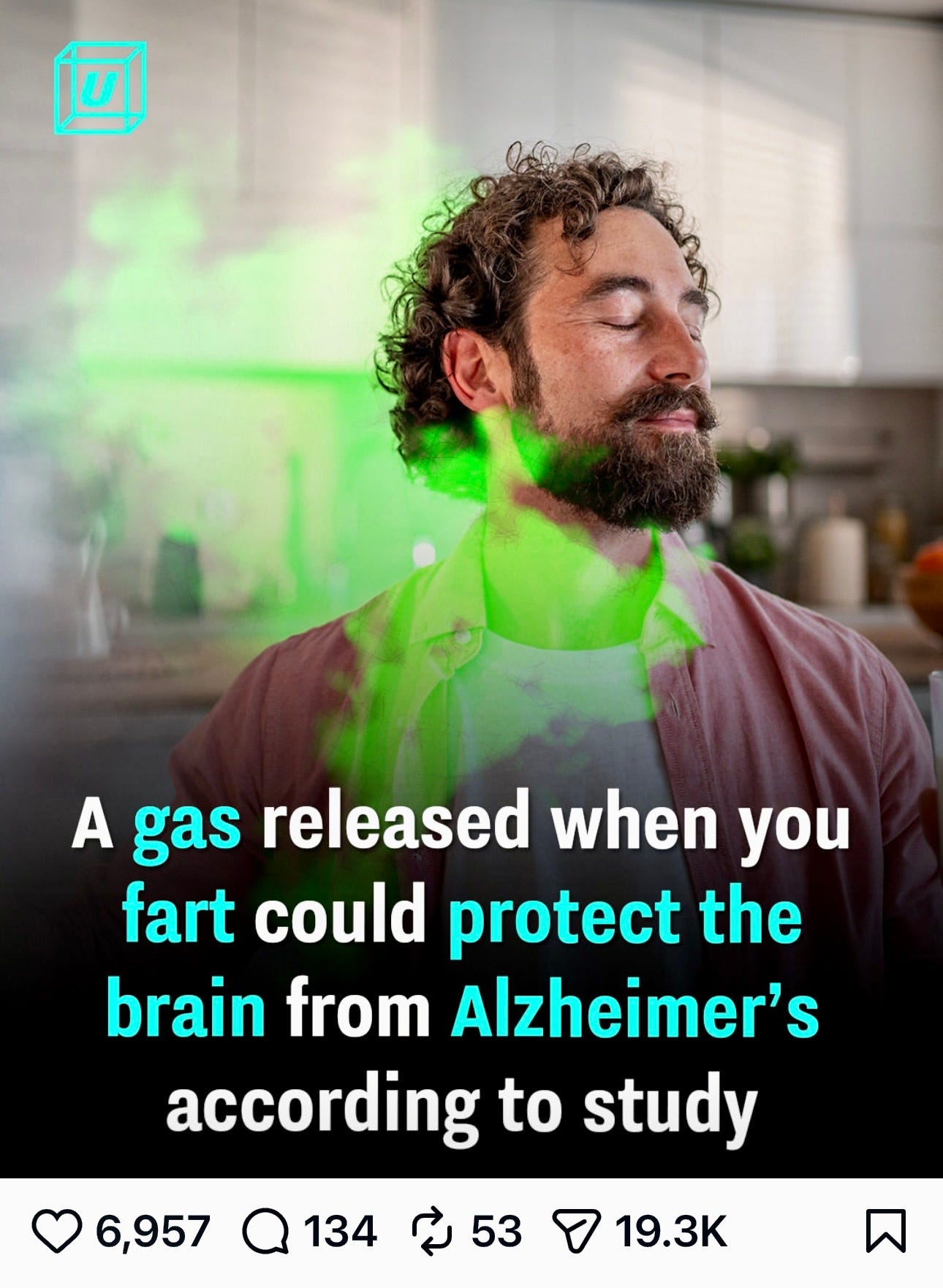
The screaming Instagram headline is ridiculous, but the science is there.
Sort of.
Researchers at Johns Hopkins weren’t standing around sniffing themselves like bored teenagers. They were in a lab with mice. Small, nervous, short-lived creatures bred to carry Alzheimer’s the way some families carry debt (Healthline).
Those mice didn’t smell anything. But they did get injections of a slow-release hydrogen sulfide compound, administered by people in white coats with clipboards.
Twelve weeks later, the mice moved a little better. Remembered a little more. Ran their tiny laps with marginally improved enthusiasm.
That was the breakthrough.
The headline indicates humans were sniffing their own farts to stave off dementia.
Alas, there was no sniffing. No humans. And certainly no cure.
Just a chemical being studied to see if it might slow brain decline someday, under the right conditions, in a future that has not yet arrived.
But the internet read “hydrogen sulfide” and went straight for the gutter.
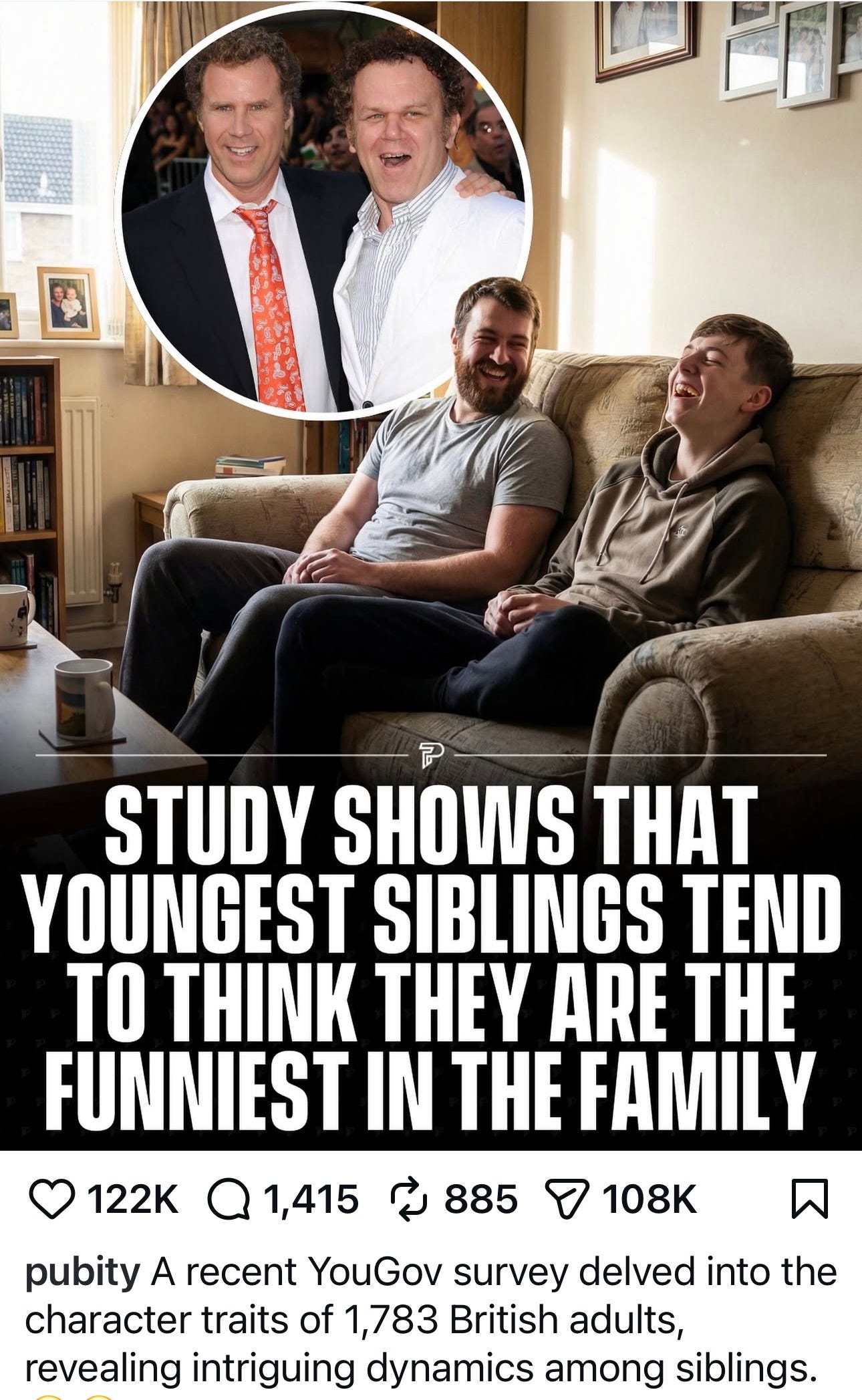
This research study shows that youngest siblings are the funniest.
A YouGov poll says the baby of the family is more likely to believe it, with forty-six percent of them claiming the crown. Oldest siblings came in at thirty-six, which means somebody in that house has been lying to themselves for years (YouGov).
There was no real data collected. Nobody sat on a couch with a clipboard ticking off jokes.
They just asked people how funny they felt, which is how most legends are born.
The rest of the poll said the oldest kids were more responsible, more organized, more successful, and more confident. The youngest ones were more relaxed.
That tracks. We all know when the hard work’s already been done, it’s easier to lean back and make commentary from the La-Z-Boy.
Some psychologist chimed in and admitted the whole thing had a whiff of astrology about it. You can’t clone children, she said. You can’t rerun families. You can’t isolate birth order like it’s a lab variable. Life’s not that clean.
Still, the idea sticks. Years of being the last one called to dinner, the smallest voice at the table, the afterthought in hand-me-down shoes, the youngest child learns to perform. They learn to talk. They learn to joke. They learn to read a room the way some people read their WhatsApp.
And sure, a lot of comedians happen to be the youngest child. But a lot of them aren’t.
The truth is that everybody thinks they’re the interesting one, especially the one who had to make noise just to be seen.
I’m the youngest child. I think I’m pretty funny. That’s what led me to Substack.
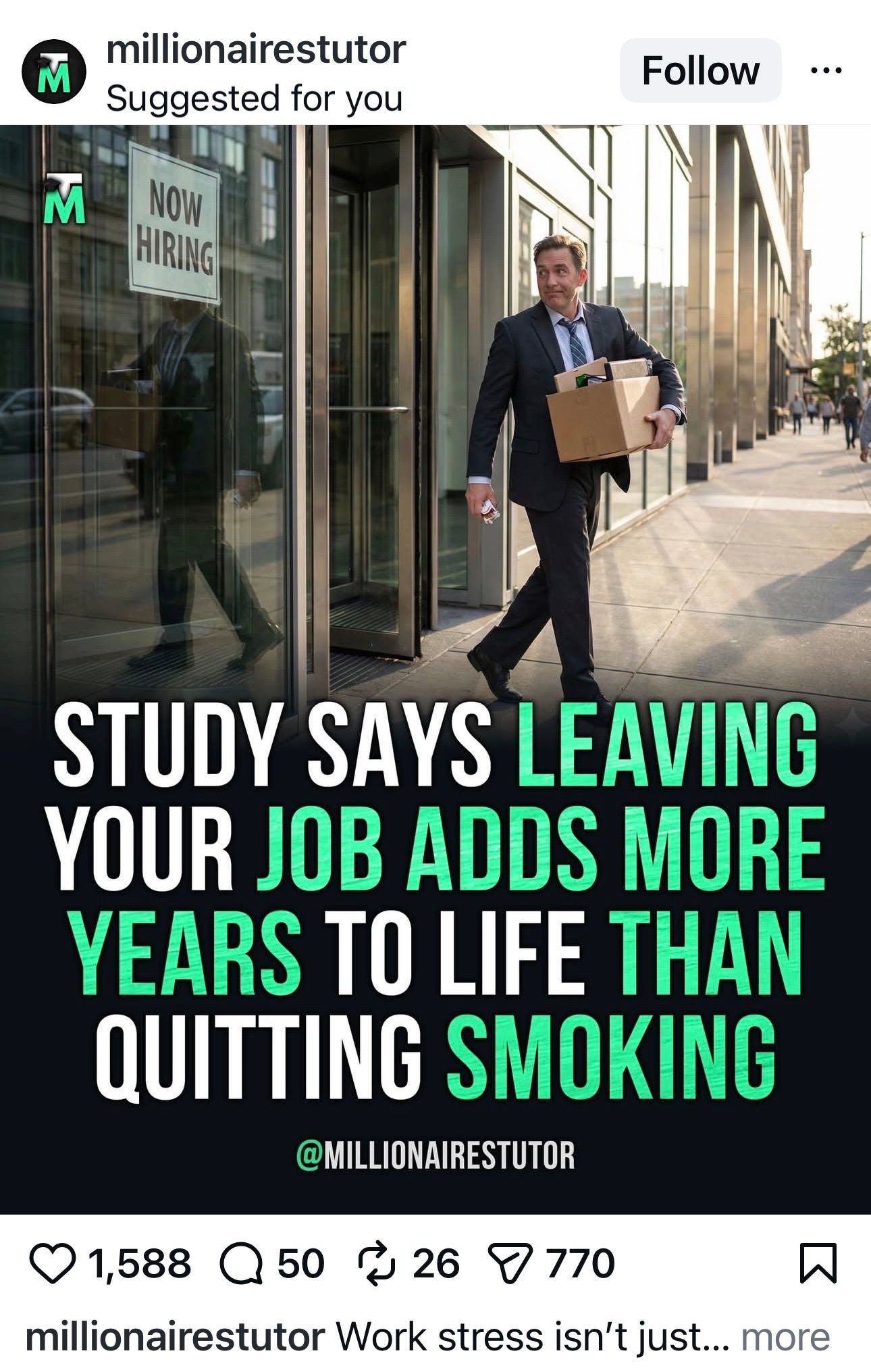
I’ve pondered the consequence of this next study many times. I probably should have been a test subject in this one.
Alas, leaving my job might make me healthier, but it won’t make me wealthier or wiser.
The study notes that quitting your job is better for your health than quitting smoking.
That’s how the internet tells it, anyway. What the Stanford and Harvard researchers actually found was a bit quieter (Stanford).
They looked at 228 studies and tracked what long hours, low control, and job insecurity do to a body over time. Turns out, it wears a body down.
People who don’t know if they’ll still have a paycheck next month report worse health. People buried under constant demands get sick more often. People who work too long, too hard, and too scared don’t live as long.
The researchers didn’t say quitting your job would save you. They said toxic workplaces can hurt you about as much as secondhand smoke.
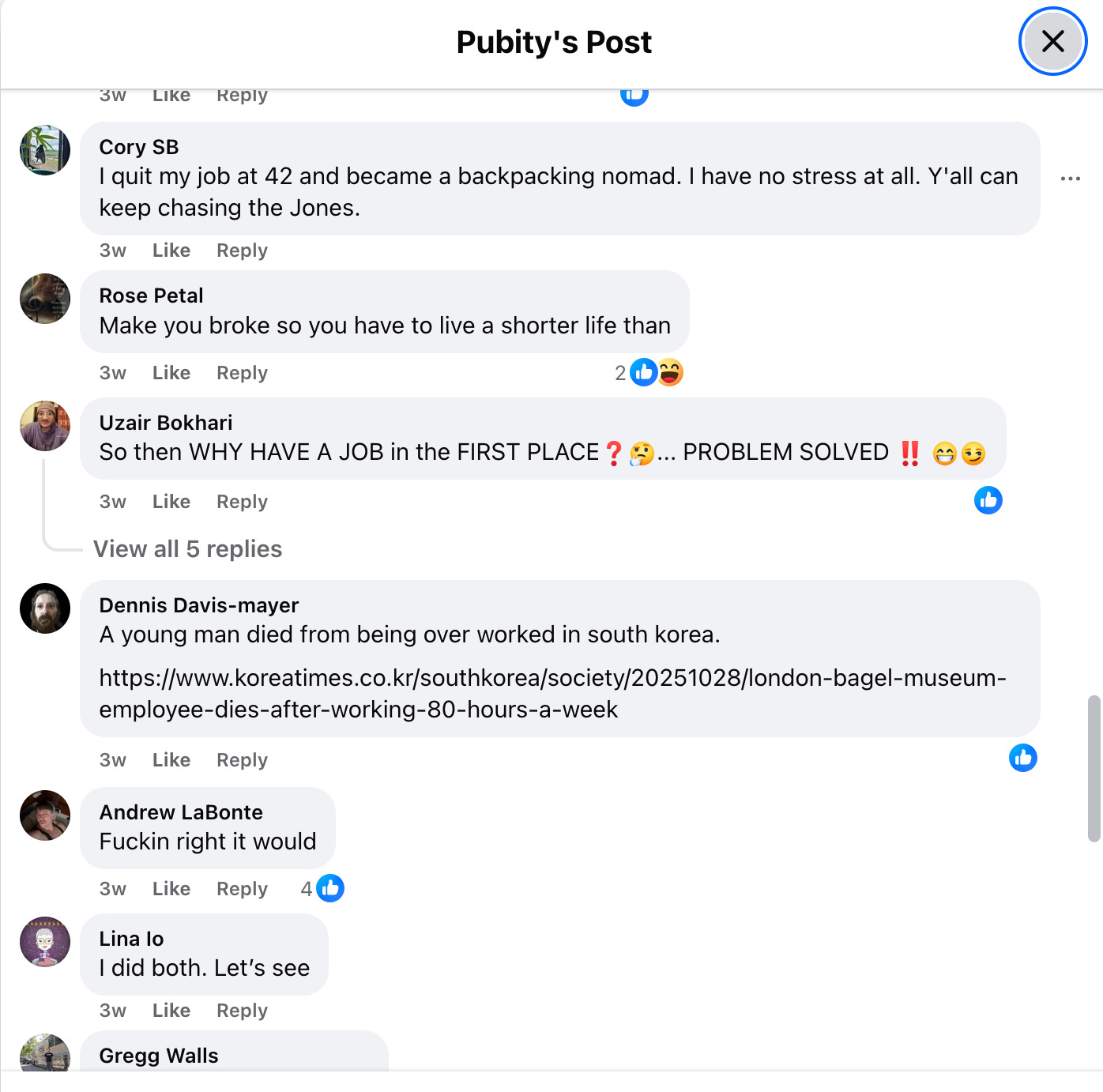
The comment section on this one didn’t disappoint.
Meanwhile, another study reveals men just can’t catch a break. Apparently, being too smart makes it harder for a man to find love.
The study itself says people like intelligent men. Just not genius intelligent. An IQ of around 120 is the sweet spot. That’s smart enough to impress, but not so smart to ruin the vibe (Masculine Psychology).
Once a man hits the ninety-ninth percentile, folks start worrying he’ll be awkward. Or hard to talk to. Maybe bring up something nobody asked for (which is less about intelligence and more about social comfort).
The researchers also pointed out that IQ doesn’t predict relationship happiness anyway. Kindness and emotional intelligence matter more.
But the internet skipped that part.

Clearly, it’s hard to be a man. And being a smart man is downright unbearable and exhausting.
But being a smart woman? That’s a whole different kind of tired.
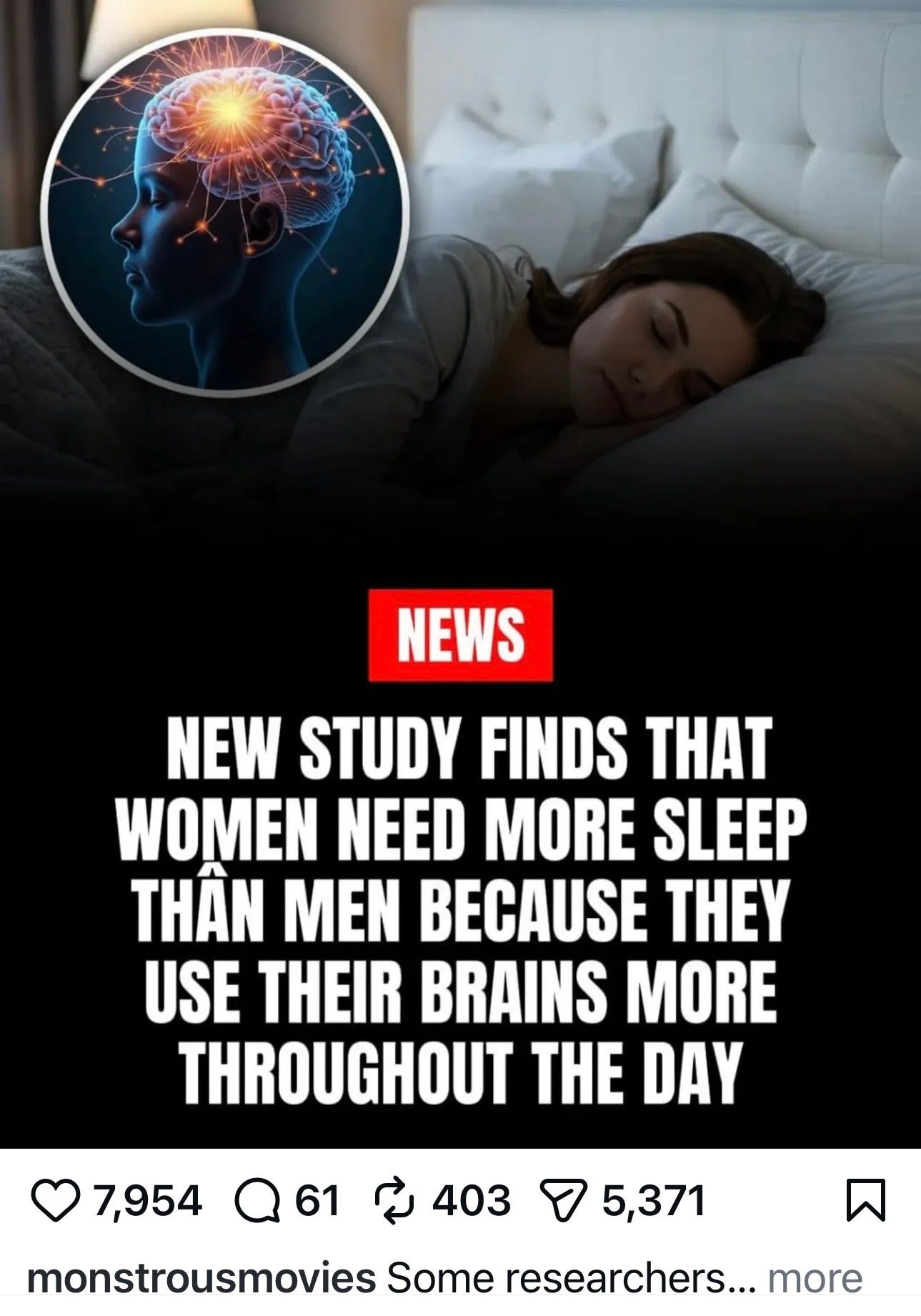
Professor Jim Horne—a seemingly intelligent man 😉 —over at Loughborough University wrote a whole book about sleep, and buried in all that science was a simple truth: women need more of it (Women’s Brain Health).
Not because we’re fragile, but because our brains never shut up.
According to the study, women, by nature, think in loops. We replay, reconsider, and carry the day with us into the dark of night. Our brains stay busy long after the lights go out, working through things men already forgot.
More thinking means more brain activity. More brain activity means more exhaustion.
And that’s why women need more sleep—even though we’re the last ones to get it.
The research says lack of sleep hits women harder. It causes more depression, more anger, and more emotional fallout. Men lose a little rest and carry on. Women lose a little rest and start unraveling at the edges.
While women are lying there running the mental inventory of the day, her significant other is over there sawing logs with a crooked CPAP mask, sounding like a busted tractor in a tin barn.
Women multitask, the sleep experts say. We use more of our brains. So we need more rest to recover from it.
Instead, we lie awake thinking—and listening to the machine breathe for him.
—Carol
Social media is a lot like a middle school classroom. (Taught middle school science for a short term. Resigned when the Asst. Principal wanted me to change the grade "D" on a child who's father was on the DISD School Board.) This young lady never did homework, never participated in class discussions, in other words did little to nothing. I was generous in even giving her a "D". The overall experience was that young ladies were constantly having emotional issues due to hormones and perceived standing within the school social ladder. The boys were also flooded with hormones and disagreements (sometime fights) leading to frequent daily events requiring intervention.
The difference paths each sex chose was clearly due to biological change and other differences in biology.
Having been a forensic scientist for 25 years and testified thousands of time, I was amazed how one side (Prosecutors vs Defense attorneys vs Judges) would try to twist real science to support the "science" most favorable to their purpose. I came to understand that each side believed that I would change by testimony depending on who hired me. To their regret that belief was a falsehood.
Hopefully, these few pathetic words will be received to support your statements in this amusing and entertaining example regarding social media lies! Thank you!
Very interesting!