Suffer the Little Children
When children dissent, power panics

There comes a point when staying silent stops being a restraint and becomes something else entirely. We crossed it when children began to be used as political pawns—taken from their parents, sent into detention camps, attacked in the streets in the name of enforcement and order.
When the state arrests five-year-old children, staying neutral stops making sense. When kids walk out of their classrooms because of it, it’s worth paying attention. That’s how change has always happened in this country—someone young gets tired of being told to sit down and shut up, steps out of line, and the rest of us are forced to face what we’ve been avoiding.
I don’t write this lightly. But as a human being, and as a Christian, I cannot watch what is being done to children and pretend silence is still an option. When the state puts its hands on children, refusing to name it does not make it less wrong.
In Texas and across the country, children are walking out of classrooms because of what ICE is doing to children, families, and Americans who dare to speak and assemble in protest. These are not undocumented students. They are not outsiders. They look like the children the state is most comfortable defending—right up until they dissent. The speed and severity of the response tells its own story.
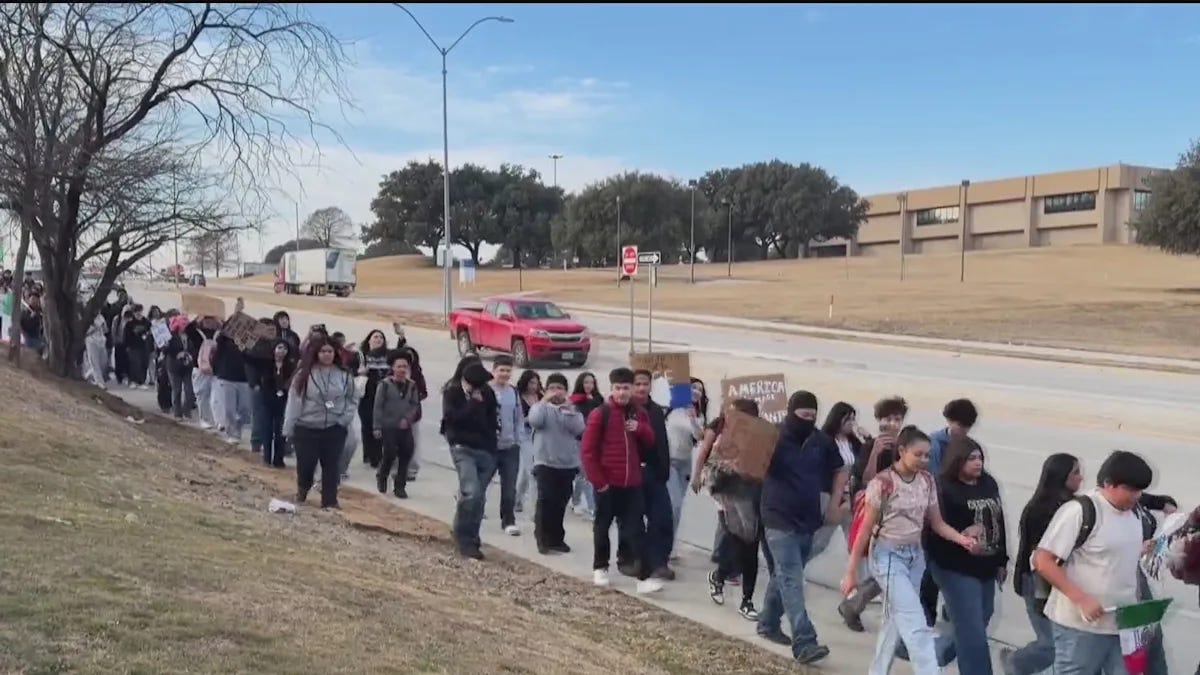
Texas Governor Greg Abbott has threatened to pull funding from schools, called for arrests of children, warned teachers to stay silent, and floated state takeovers of local school districts if students continue to protest. He’s not concerned about the safety of the children. He’s angry because he knows what happens when kids start thinking for themselves.
Here’s what history keeps proving. This country wasn’t built on obedience. It changed because people said no and meant it. Independence, labor rights, civil rights, women’s suffrage, student speech—none of that came from keeping the peace. Order mostly serves whoever already has it. Justice usually shows up only after someone has made a nuisance of themselves.
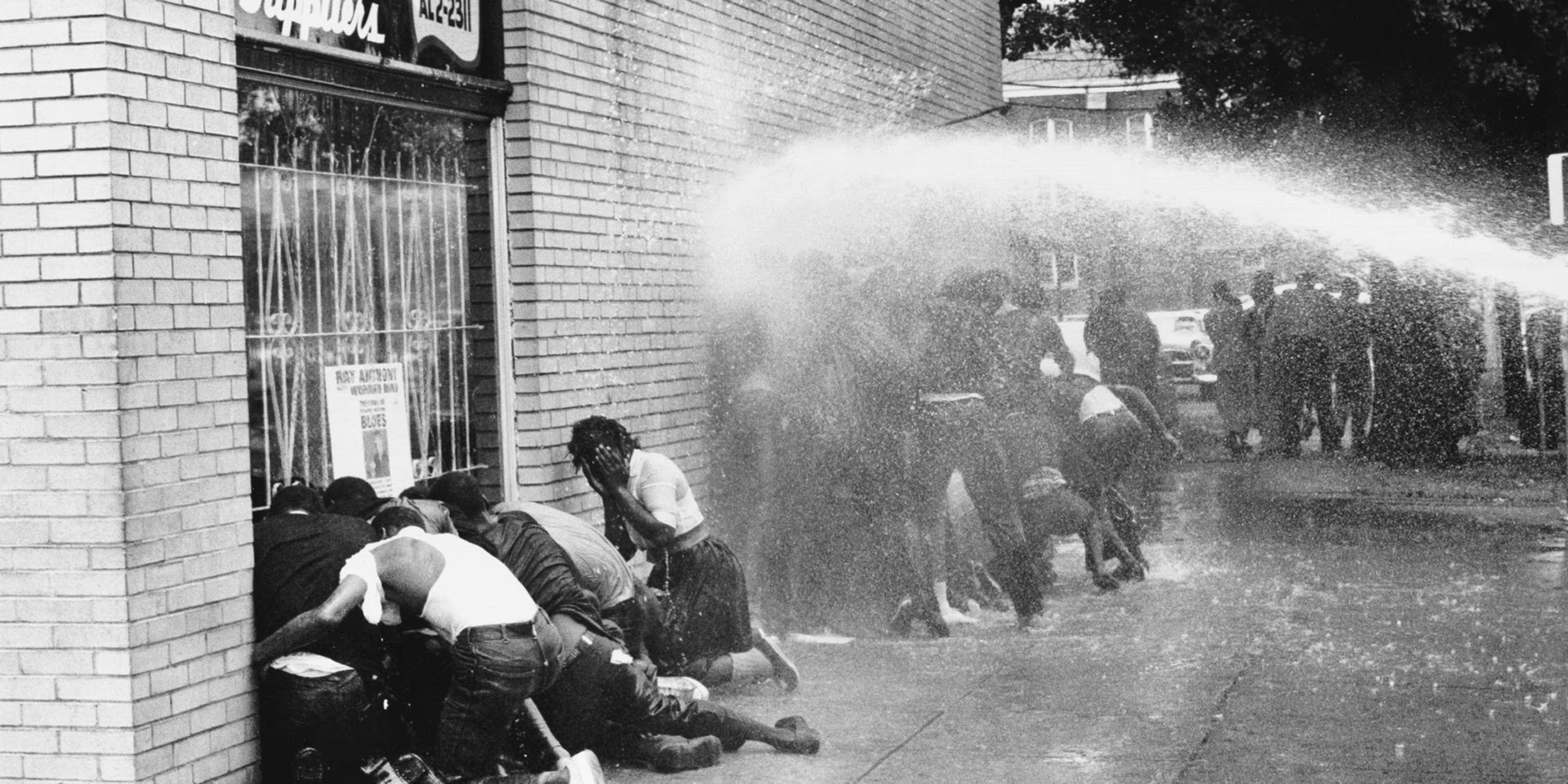
When the civil rights movement stalled in Birmingham, Alabama, in 1963, it was children who broke the stalemate. Students walked out of schools. They filled jails. They faced dogs and firehoses. Adults had been talking for years. It took children to make the country stop and look.
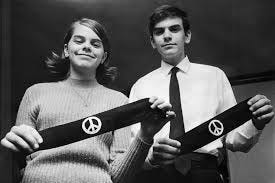
In 1965, children in Des Moines, Iowa, were sickened by what they saw nightly on the news—images of dead and wounded children from Vietnam. Mary Beth Tinker was thirteen. Her brother John was sixteen. They protested in the only way they knew, with black armbands as a quiet sign of mourning. It wasn’t loud. It wasn’t disruptive. It was symbolic.
The school district tried to silence them anyway.
That effort failed, and the Supreme Court made it plain in Tinker v. Des Moines that students do not shed their constitutional rights at the schoolhouse gate. That ruling exists because children refused to be quiet and adults tried to make them so.
Texas knows this history. It’s seen this tactic before.
In the 1950s, John Henry Faulk, a Texas humorist with a popular radio show, was nearly ruined during the McCarthy years. His story was later told in the PBS program The Man Who Beat the Blacklist. Faulk wasn’t targeted because he was a communist—he wasn’t. He was targeted because he spoke freely and had a public voice. Calling him a communist was simply the fastest way to shut him down.
“The life’s blood of this country,” Faulk said, “is an open and robust dialogue… where everybody’s free to say what they believe, why they believe it, and to persuade their neighbor to their point of view. That is the way we move forward in our society.”
What’s really shaking people in power isn’t disruption. It’s kids thinking for themselves. Schools were built to teach order and obedience, not to raise questioners. That worked fine as long as the children stayed in their lanes.
But kids figured out they could reason on their own. They learned to tell when something was wrong, even if an adult in charge said it was legal or necessary or none of their business. And when young people stop falling in line, authority usually responds the same way it always has—with threats and punishment.
Yet, we call ourselves a Christian nation. And that should stop us cold.
The Jesus of the Gospel of Matthew did not prioritize order. He flipped tables. He confronted power. And when his disciples tried to push children away, he stopped them cold.
“Suffer the little children to come unto me.”
In older translations, suffer does not mean endure. It means allow. Permit. Do not hinder.
Jesus did not merely tolerate children. He elevated them. He said the kingdom of God belongs to those who resemble them—humble, unguarded, unafraid to speak plainly about what is wrong.
So when children stand up and say “this is wrong,” and the state responds with threats and punishment, we should stop pretending this has anything to do with Christian values. Or even American values.
This country has always demanded the most from its young people and trusted them the least.
Young people fought for America’s independence. Young people have filled the ranks of every war since.
At eighteen, they must register for the draft—old enough to die for the state. But at seventeen, they are punished for exercising the very rights the state claims to defend.
The First Amendment doesn’t come with an age requirement. The law is settled. The history is settled. What is not settled is whether those in power intend to honor either when dissent becomes inconvenient.
Texas has seen this before. Every attempt to crush dissent dresses itself up as order, patriotism, or protection.
History does not remember silence.
It remembers those who spoke up—and who tried to shut them down.
—Carol
Good article. Invariably, conservatives are accusing kids of not understanding the issues. From what I’ve seen as a teacher, today’s kids are VASTLY better informed than we were at my age. And let’s be honest, they’re miles ahead of most boomers in media literacy. Even “6-7,” The most annoying trend to come out of kids these days, originated as a joke about trying too hard to game YouTube’s algorithm. They know how advertising and sponsorships and monetizing engagement metrics and censorship work because that’s 90% of social media. These kids at their dumbest understand media better than most Fox-news patriots who are constantly getting duped by nonsense on the internet. I’m very proud of these kids.
First, thank you for your service! I agree with you that kids today are extremely savvy, that’s why red states are dumbing down curricula and threatening school districts. But they can’t stop the kids. It never works. Thank you for reading my article.