The Rooms Memory Built
On Family Secrets, Unreliable Truths, and the Book I’m Afraid to Write.

I’m scared to write about my family. Not because the stories are dramatic, but because they’re tangled—truth wrapped in lies, lies wrapped in love, and the in-between where most of my childhood lived.
I was the youngest of six, which should have made me the protected one. Instead, I was the one left standing when everyone else fled.
Mama’s mind frayed as the years went on, and Daddy met the chaos with a kind of deliberate indifference that felt like its own form of violence. By the time I was old enough to know better, I was already carrying their secrets. Some were whispered, some were shouted, and some were never named at all.
Now I feel compelled to write Psalm of Lies, a book rooted in those years, and I’m terrified of what might surface when I do.
The idea for this book didn’t come out of nowhere. It came from newsroom tables and late-night conversations with journalist friends who were fascinated by the stories I used to tell about my family—Candy Barr. J.D. Tippit. Daddy’s proximity to history. Mama’s tales that blurred the line between memory and myth.
They leaned in when I talked. They laughed, shook their heads, and finally said the same thing every time: You need to write the damn book. Back then, it sounded like encouragement.
Now it feels like a dare.
I grew up in a house where stories did the work silence couldn’t. My parents and their friends talked late into the night, and I listened from the hallway, cross-legged on the floor, when I was supposed to be asleep in my room.
They told stories about the past, about each other, about things that weren’t meant for children’s ears. Those stories settled into me the way dust settles into old curtains.
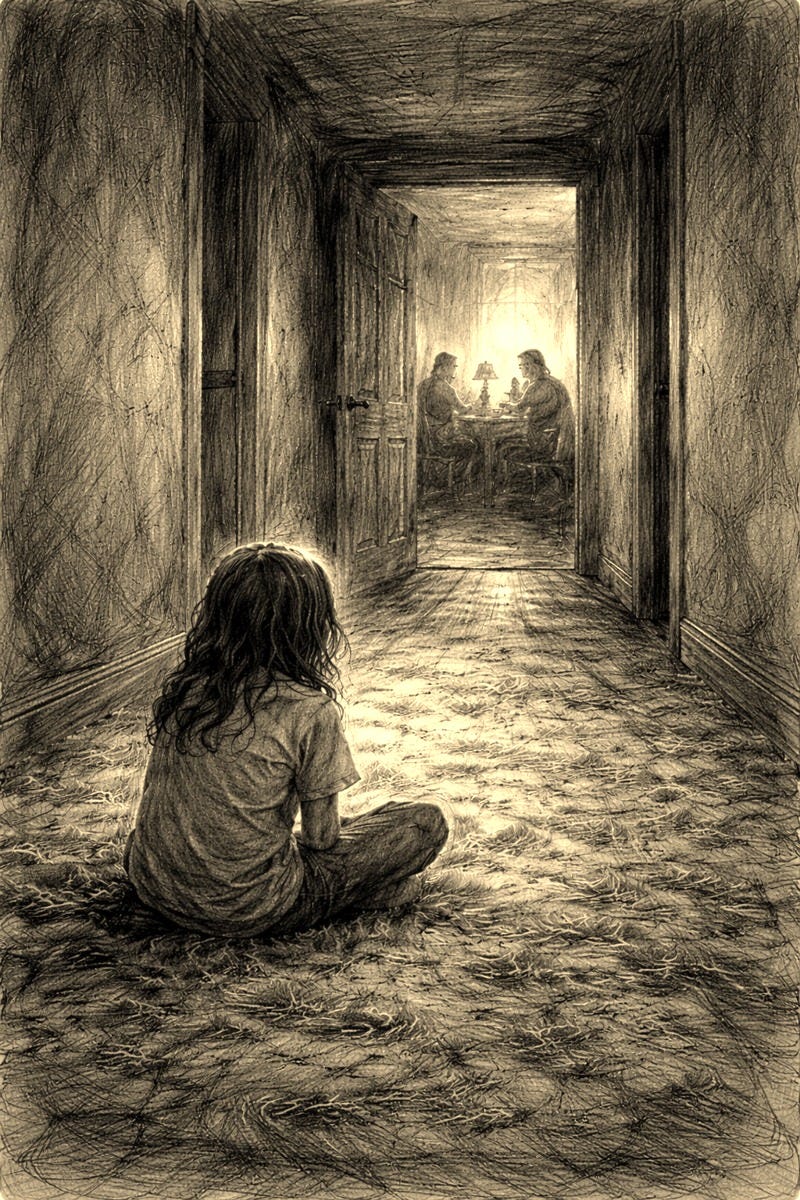
When Mama drank, the stories deepened. She spoke to me like I was grown, like I was her therapist, her witness, the only one still listening.
I was nine, maybe ten, and she told me about love and betrayal, about fears she never shared with anyone else. I loved her. I resented her. I didn’t have the language for either, so I learned to hold both at once.
As my siblings left, Mama stayed up later and drank more. She worried louder. She wondered where Daddy was, who he was with, whether he was working or wandering.
And she told me secrets. Every version. Some of them were probably true. Some of them were probably her imagination. Most of them lived in the blur between the two.
That blur became my reality. It followed me into adulthood like a shadow that never quite lifted.
For years now, my dreams have taken me to the same house. It isn’t anywhere I’ve ever been in waking life. It only exists when I’m asleep—large, crooked, full of hallways that don’t quite line up. The rooms feel familiar, like places I should recognize, even though I’ve never lived in them.
There are two rooms in particular I’m drawn to. I can walk into them, look around, feel the weight of them. But I’m never allowed to stay.
The house feels divided, though not neatly, and I always wake up with the sense that I’ve wandered through my own life without ever unpacking.
Sometimes I think those rooms belong to my parents. Other times, I’m afraid they belong to me. One feels like Mama’s—heavy with unspoken thoughts, crowded with memory, a place where emotions spill and never quite dry. The other feels colder, quieter, like Daddy’s distance made into walls. Or maybe they’re just different parts of myself, split by years of watching, listening, absorbing. In the dreams, I’m not forced out. I leave because I’m unsure what will happen if I stay.
What if I go into Mama’s room and recognize myself?
What if I sit down and feel comfortable there?
What if I become her in the telling?
That possibility scares me more than any accusation of getting the facts wrong.
Writing Psalm of Lies means opening doors that have been shut for decades. It means trusting a memory shaped by stories, silence, and a child’s need to make sense of what adults wouldn’t explain.
I’m not afraid of sentences. I’m afraid of what those sentences might wake up. The stories I grew up with were real because they were told to me—over kitchen tables, in smoky living rooms, late at night when children weren’t supposed to be listening. They shaped how I understood my family and myself. Whether every detail was factually perfect matters less to me than the way those stories felt to live inside.
Still, I hesitate, because I know how easily memory gets questioned, especially when it comes from a child who had no choice but to believe what she was told.
What scares me isn’t that I might invent something. It’s that I might tell the truth as I experienced it, and be told it never happened that way. My story lives in that uneasy space where autobiography and imagination overlap, not because I want it to, but because that’s how I learned to survive.
And I’m afraid, too, that the story will be rejected the way I often was—quietly, without ceremony, as if it never quite belonged in the room. That fear sits right alongside the others: the fear of what I’ll find, the fear of what I’ll become, the fear of what I can’t take back once it’s written.
I believe the house in my dreams keeps showing up because my mind doesn’t forget what I postponed. The rooms I never claimed. The stories I never told. The truths I never named.
While I work on safer projects, while I polish other pages, Psalm of Lies waits in those empty rooms, patient as dust, calling me back.
In the dream, I’m not locked out. I’m hesitating.
And sooner or later, hesitation turns into its own kind of haunting.
—Carol
Beautifully written piece, Carol! I find it interesting how siblings can have very different experiences and relationships with parents. There are so many different emotional and situational levers that are pulled during our cbildhood, and if we are lucky, into adulthood. I look forward to reading your book!
Memories are a funny thing. They have the power to bring us joy and beauty. Yet, they also have the power to bring guilt, jealousy and shame. What if I turned left on that street, instead of right? It's possible that may have changed my whole life. However, it is also possible that it would not have changed a single moment in my life. We live in the moment, our memories and experiences both consciously and unconsciously guiding us and affecting our daily life choices. I believe that reflection upon the past can help guide us to make better decisions, but it does not guarantee that we will always make the best decision. Life is a journey and you have to choose where you are headed with every single step.
Your writing truly touches this reader. Full speed ahead!