They were just children then. They are just children now.
From a forgotten Texas internment camp to a Minnesota elementary school.

The federal prison in Seagoville, Texas sits low against the land, all razor wire and watchfulness. Most people drive past it without knowing it once held children.
During World War II, Seagoville was an internment camp. Not for prisoners of war. Not for spies or criminals. It held families—Germans, Italians, Japanese, Latin Americans. Many legal residents. Many American citizens. Many children.
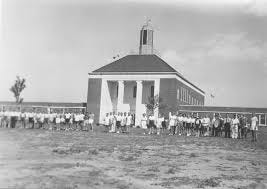
I know this because in 2004, two of my journalism students and I spent months talking with the people who had been held there as children. We spoke with them by phone. I exchanged emails that I printed and saved, knowing even then they mattered. I listened as they described growing up behind barbed wire in a country they believed would protect them.
The Grabers were among them.
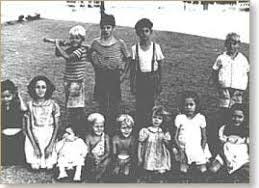
Gunther Graber and his siblings were American-born children when the FBI came for their family.
In 1943, J. Edgar Hoover sent a memo ‘for publication in morning papers’ insisting that ‘in all instances’ people were taken before ‘Hearing Boards.’ That’s what the government called it. The people I spoke with didn’t call it a hearing. They described no court, no lawyer, no chance to face evidence—just a process that moved them from their home to detention while Washington told the country everything was orderly.
Their father, a German immigrant, had been labeled an enemy alien, and the children were pulled into that label.
Their father believed this could be fixed.
He wrote directly to President Franklin Roosevelt.

In that letter, he explained that his children were Americans. That the family had fled Germany because they believed in American freedom. That there had been no crime, no trial, no evidence—only suspicion. He asked for a reason. He asked for due process. He believed the Constitution would matter.
It didn’t.
Instead, armed guards arrived. The family was taken to Seagoville. The children learned what it meant to be declared enemies by the country they trusted.
Years later, Gunther told me the worst part wasn’t the confinement. It was the silence. No one explained what was happening or how long it would last. The letter to the president vanished into a system that had already made up its mind.
That’s how democracies fail—not with speeches or spectacle, but with decisions made quietly, far from the people they reshape.
I later spoke at length with Art Jacobs, Major, USAF (Retired), who spent decades researching internment in the United States from December 7, 1941 through July 1948. Jacobs was methodical, patient, relentless. He tracked records others ignored and noticed what was missing.
He told me German and Italian internment was largely erased because it complicated the story Americans wanted to tell themselves after the war. Japanese internment eventually forced a reckoning.
So their history was scattered. Their stories left to private correspondence and aging memories.
Jacobs died in 2023 at the age of 90. His website, foitimes.com, is still online—a quiet archive holding names the government never gathered in one place.
Another of those names is Eberhard Fuhr.
Fuhr wrote in an email to me about the day the government came into his classroom.
He was 17 years old when FBI agents walked in, drew a weapon, and arrested him in front of his peers. He never returned to school. He never graduated. He spent four and a half years interned.
Years later, he said the humiliation wasn’t incidental. Arresting a child in front of classmates teaches a lesson quickly: authority does not owe you an explanation.
This happened while America was at war. Pearl Harbor had been bombed. American soldiers were dying overseas. Fear was real. The country was under attack.
Even so, history would eventually admit putting children and families into internment camps was wrong.
Congress apologized. Under President Ronald Reagan reparations were paid to the Japanese-Americans, but not the German-Americans. We say ‘Never Again’ because it helps us believe we learned something.
Which brings us to now.
On January 20, five-year-old Liam Ramos stood in freezing temperatures in his backpack and blue hat as Immigration and Customs Enforcement agents took his father into custody. Liam wasn’t hiding. He wasn’t running. He wasn’t a threat. He was a kindergartener coming home from school.
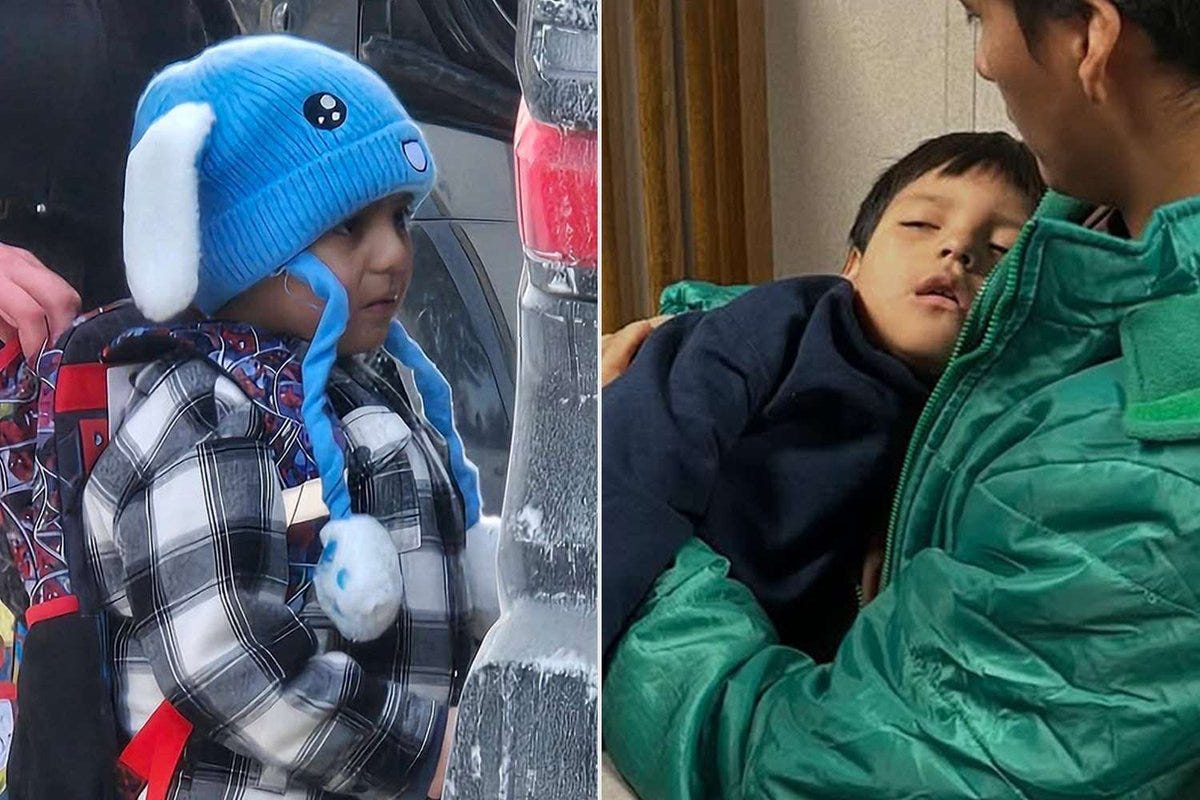
There were other adults present.
ICE took Liam anyway.
He was transported hundreds of miles away to the South Texas Family Residential Center in Dilley, where lawmakers later described a child who was quiet and withdrawn—asking for his mother, talking about school.
A federal judge has blocked his deportation. For now.
And then it happened again.
On Thursday, two more children from Liam’s elementary school—a second grader and a fifth grader—were taken into custody.
Their mother was detained during a routine court appointment. She had no family in Minnesota who could take her sons. So she called the school.
She asked the principal to bring her children to her.
The principal had to tell two boys they were going to a detention center.
They cried. They were frightened. A school nurse held their hands as they walked into the Whipple Federal Building—past armed agents, security checkpoints, and masked officials.
Three children.
One elementary school.
One week.
But America is not at war.
There has been no attack on U.S. soil. No foreign army advancing. No declared national emergency. The Constitution has not been suspended. Habeas corpus has not been revoked.
In the 1940s, children asked questions their parents couldn’t answer. Not because the answers were complicated, but because there were none. The system wasn’t built to explain itself to children.
Then, the government used the phrase enemy alien. Today, it uses illegal alien. Different words, same effect. It’s language that turns people into categories and categories into paperwork.
Liam Ramos is five. He doesn’t know what illegal alien means. But he knows the agents came. He knows he was taken away from his mother, away from his school, away from the small, steady things that make a child’s world feel safe.
Then, we told ourselves we had no choice.
Now, we say the same thing.
Gunther Graber told me he didn’t want revenge. He wanted acknowledgment. He wanted Americans to understand that once a government decides children can be detained without explanation, something fundamental has already been lost.
He was right.
Seagoville is still standing.
The people who survived it are mostly gone now.
What they left us were warnings.
Whether we hear them is up to us.
—Carol
History repeats itself and yet we are so blind.
Thank you for this story! History is important. You would think we would learn from history's examples. Sadly, that assumption has been proven wrong over and over in History around the world and regardless of to whom or where it happened.