Tuesdays With Fritz
Daddy took us across the Trinity on Tuesday nights. Fritz Von Erich's Iron Claw did the rest.

Most of my childhood memories come to me in shades of yellow. Sepia-toned with ragged edges.
Not this one.
In my mind, this memory flickers like an old black-and-white television reel with the color red splashed across it.
It was the late 1960s, and I was about five years old when Daddy put me on the front of his BSA motorcycle, settling me between his chest and the gas tank lid. He’d button me inside his shirt or jacket—an early form of seat belt, I guess—and we headed across the river toward downtown Dallas.
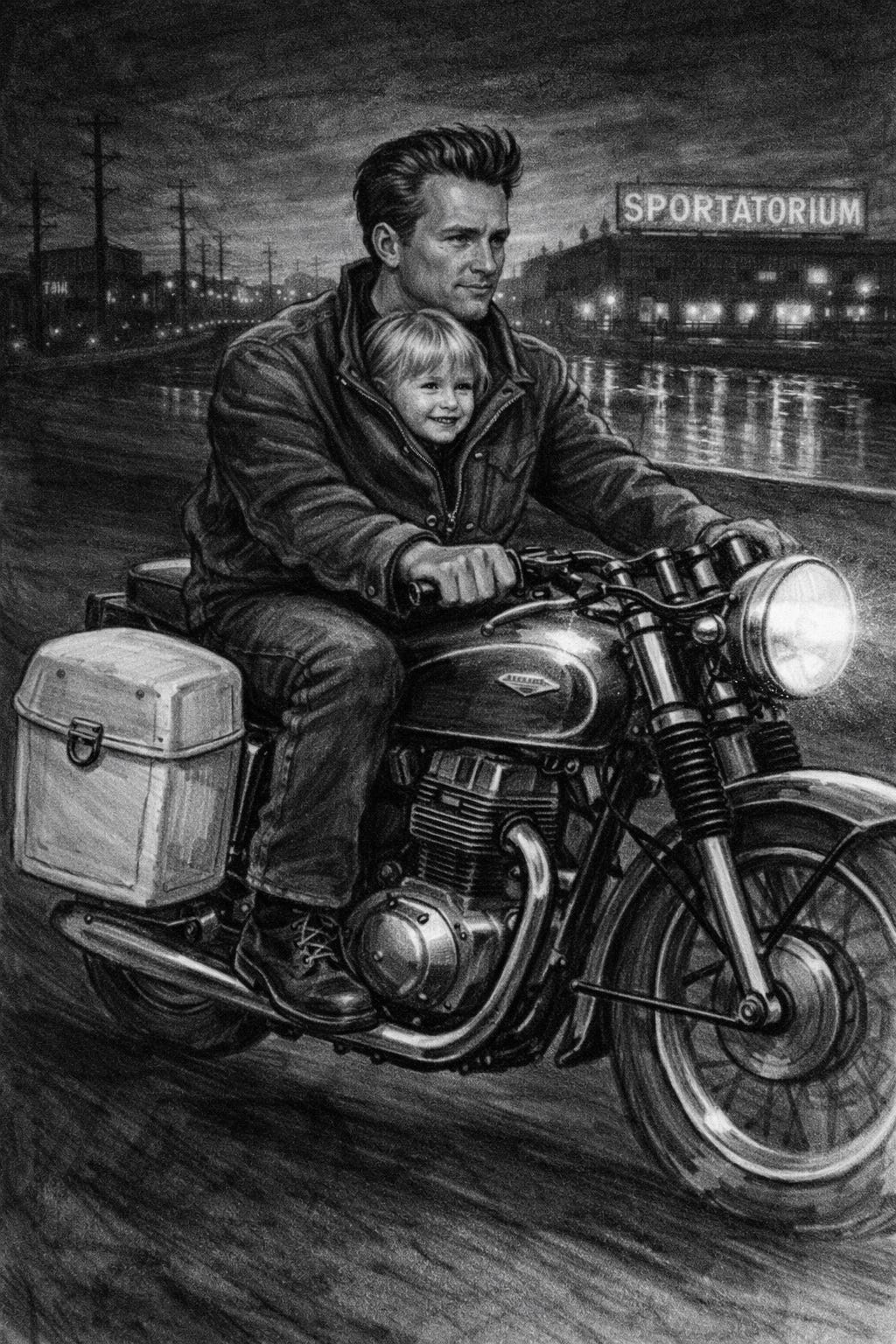
I now know why he was taking us. Mama and Daddy were separated again. They had a rhythm to it, those two, more regular than the light bill. Tuesday night was his night with the kids. And he wasn’t a man who sat still.
So, we went.
The ride carried us out of Oak Cliff through the industrial corridor that ran along the Trinity River, and even half-asleep, I could feel the road change. The concrete seams of the highway thumped rhythmically under the wheels—thump, thump, thump—and when I opened my eyes, the dashed lane markers streaked by, mesmerizing me.
Then the smells hit. Something sweet and yeasty came first, probably from the Fleischmann’s yeast plant, where Daddy would later work. Then came the stench from the meat processing plants, sharp and rank. But it was the Trinity River that overpowered everything. Still does.
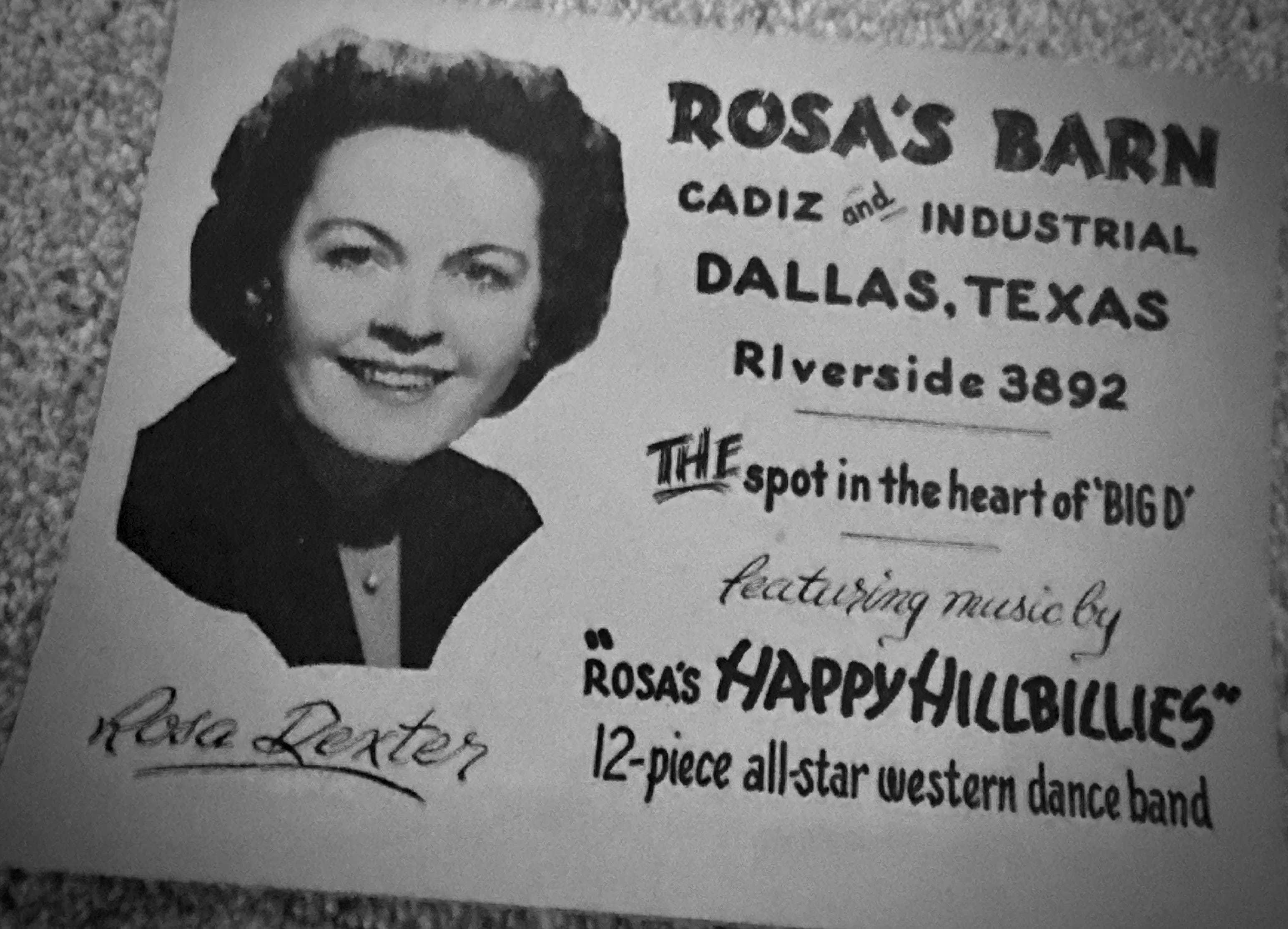
The whole corridor down there was that way: meat plants, the river, and honky tonks pressed up against each other like they had nowhere else to go. Rosa's Barn sat right there at Cadiz and Industrial, a twelve-piece western dance band spilling out into the night. Right next door to where we were headed.
You don’t forget the Trinity. It smells like mud, sewer, and despair. I didn’t have words for it then. I just knew it was there, and it had a certain mystique. When Mama was running low on beer, she would yell, “Bobby, go across the river!” So that’s how I grew up, believing something magical was “across the river.”
That was the beginning of my obsession, though I wouldn’t know it for years. The Trinity runs through every short story I’ve ever written. It is always there, violent, unhurried, secretive.
And then the sign. Big red letters across the front of the building, blazing SPORTATORIUM against the night sky. I didn’t know how to read yet. But I knew red.
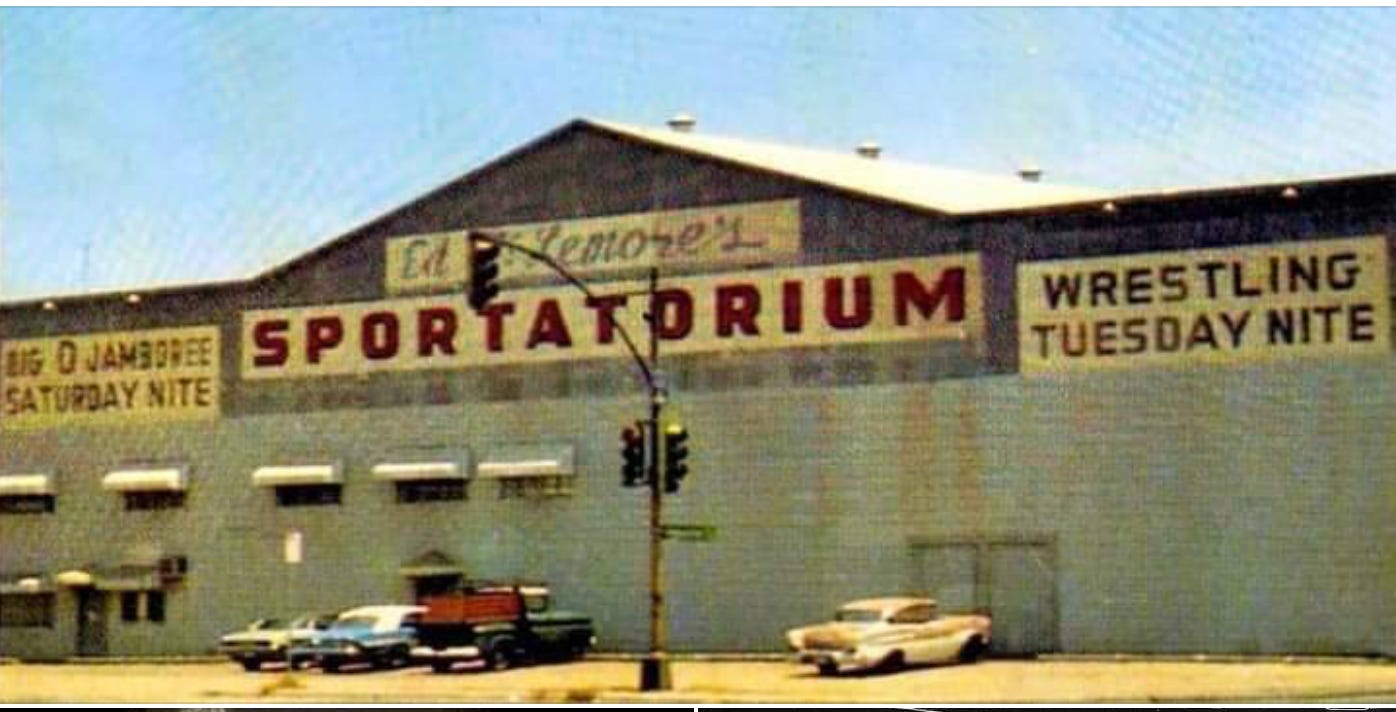
The Sportatorium sat at the intersection of South Industrial Boulevard and Cadiz Street. Writing this, I went back to check my memories against the record, and I found Nolan Dalla’s account, which describes the place more vividly than I’d trust my five year-old self to do: “a massive barn of chain link and sheet metal, rat-infested, no heat and no air conditioning, a dirt parking lot that turned to mud every time the Trinity flooded. When somebody hit the canvas, the plywood under it made a sound like a gunshot off the tin walls.” Dalla loved it.
So did I, though I couldn’t have told you why then.
What I can tell you is what I actually remember: the crowd packed in tight, the smell of cigarettes and beer and cheap perfume, the noise coming at me in waves. The ring was lit up hard, the way a bare bulb lights a room, everything bright at the center, everything else falling off into black.
There were always women there that Daddy parked me with. Then he and his fellow Teamsters would disappear to talk business, his back against the wall, elbows leaning on the railing. Beer in hand.
So I sat with the women, or my grandmother on occasion, and I waited for Fritz.
Fritz Von Erich, Jack Adkisson was his real name, was the largest human being I had seen in my life up to then. Six foot four, hands like a major league baseball glove. I’m told he played the villain in those years, but he was a hero to Daddy and me.
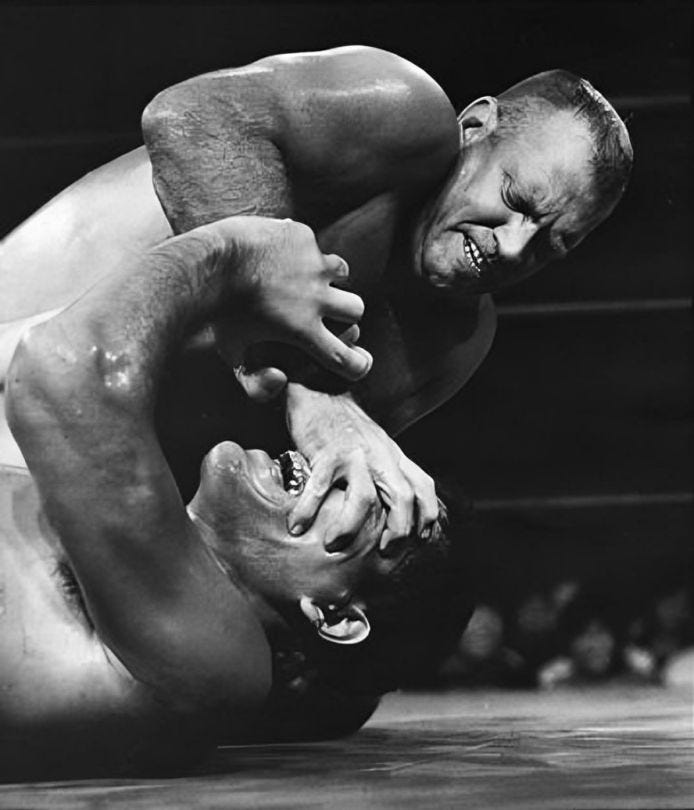
When Fritz caught a man’s head in that iron claw, palm flat to the forehead, fingers pressed hard to both temples, the building came unhinged. Grown men rose off the bleachers. Women screamed. Children screamed.
I screamed.
The man in the claw would go limp, and Fritz would hold him there while the referee counted, and the noise piled up against the tin walls until you couldn’t hear your own thoughts. Which was probably the point.
I was young. I thought it was all real.
I still think it was real, in the ways that matter.
On the ride home, Daddy’s chest was warm behind me, and I’d fall asleep before we hit Oak Cliff.
Then Saturday night would come, and Channel 11 would broadcast that same match. Same ring. Same ropes. Same Fritz with those huge hands. The whole family sat in front of the television and watched, cheering on Fritz. My brothers, who I later found out were actually my half-brothers, would jump up and down, yelling at the TV, before raising their arms over their heads in victory.
I loved watching my family watch the same match I had already seen. All of us knew Fritz would win, but we all jumped for joy when he did, anyway.
But I could feel the difference.
Live, in that building, with Daddy beside me or at least in sight, the river somewhere nearby, and the red—that was the real thing.
Channel 11 was just what happened when you watched the world from too far away.
—Carol
Author's note: Tuesday night wrestling at the Sportatorium was a Big Time Wrestling card under Fritz Von Erich's promotion—taped and broadcast later on KTVT Channel 11 on Saturday nights. In researching this piece, I leaned on Nolan Dalla's account of the Sportatorium for details my five-year-old self didn't catalog. His description is here: https://www.nolandalla.com/every-picture-tells-a-story-dallas-sportatorium-1970s/. The Sportatorium stood at 1000 South Industrial Boulevard until its demolition in 2003.
The Trinity River is still there.
Damn fine stoah-ree.