Green Stamps and Jesus
Mama had two savings accounts: S&H Green Stamps and the Lord. Both required belief.

My Mama believed in two financial systems.
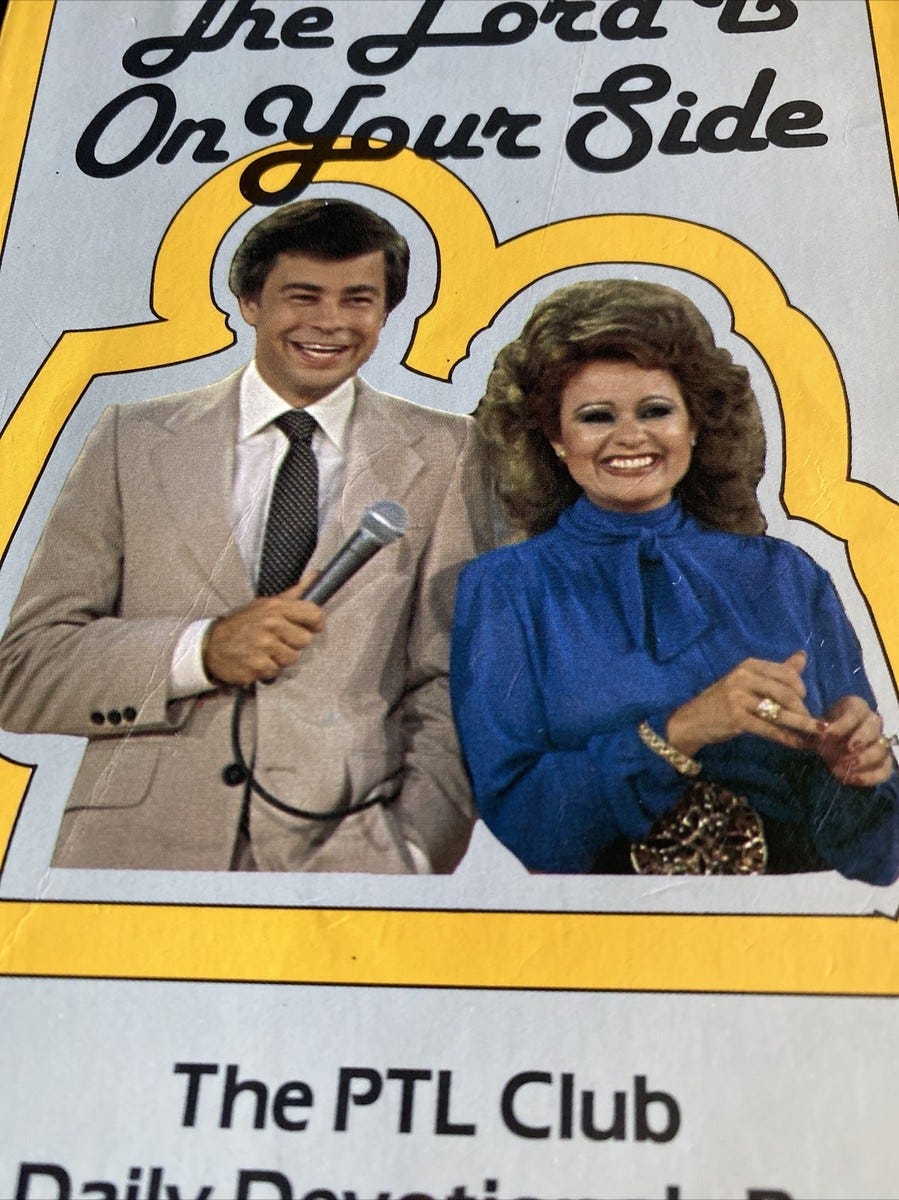
The first was Jesus. She watched Jim and Tammy Faye Bakker every day like they were the news or her favorite soap opera.
The second was S&H Green Stamps.
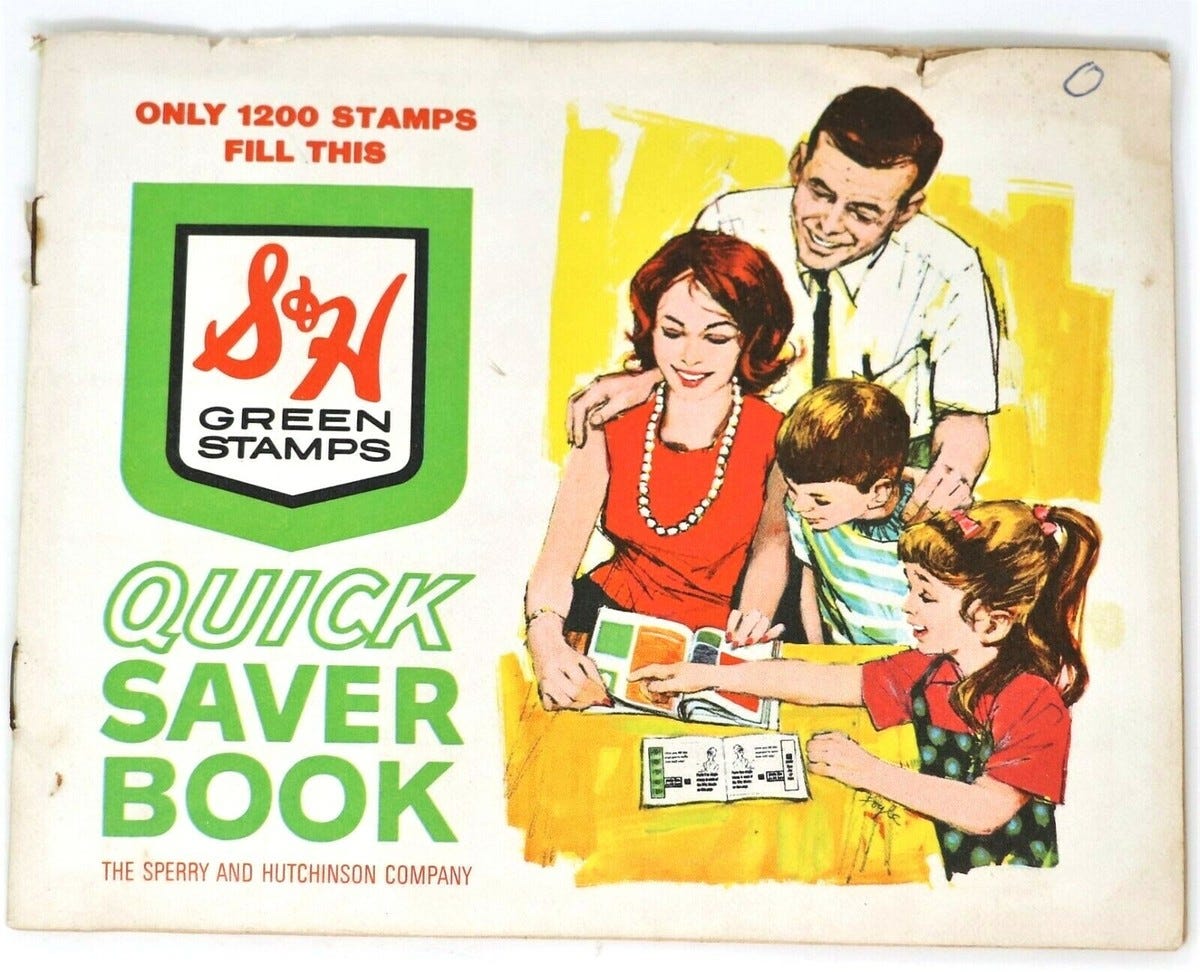
If you’re too young to know what they were, S&H Green Stamps came free with gas, groceries, whatever you bought. You licked them into little booklets, mailed the booklets off, and got merchandise back from a catalog.
They were popular through the depression era, hit their peak in the ‘50s and ‘60s, but were still around in the ‘70s.
At their peak, S&H was printing three times more stamps than the U.S. Postal Service. The whole system ran on the honor of a good lick and the belief that small things added up.
Every time Daddy came home from the gas station, he’d walk in the door smelling like gasoline and cigarettes and slap a strip of green stamps on the Formica table as if he’d just brought home gold bullion.
Mama’s eyes lit up.
You’d have thought Rockefeller himself had stopped by.
“Carol,” she’d say, already pushing the booklet toward me. “Start lickin’.”
Our kitchen table was one of those faux-wood Formica numbers that passed for respectable if you didn’t look too long. The pattern was supposed to resemble walnut grain. It resembled a bowling alley lane that had seen better days.
That table hosted many a game of Solitaire, Rook, Wahoo, and the sacred Green Stamp licking ritual.
Mama chain-smoked. She’d throw her head back and blow smoke circles toward the ceiling. “Look,” she’d say, “I have a halo. Someone up there loves me.”
Then she’d tear the stamps into neat little squares. She handled them with the seriousness of a bank teller counting cash. And shove them toward me.
My job was the glue.
Children today grow up thinking their childhood trauma was when the internet went out. They don’t know what it means to lick three hundred trading stamps until your lips stick together like you’ve been shellacked.
By the end of a session, my tongue tasted like a postage stamp, and my mother sat with the quiet joy of a woman slowly buying a toaster she could not afford.
Mama didn’t go to stores. She had agoraphobia, though back then we just called it being a “shut-in.”
But she could travel anywhere in a catalog.
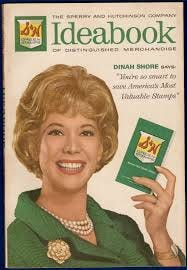
The S&H Green Stamp catalog lived on the table beside the Sears Wish Book and the J.C. Penney catalog, which Mama flipped through like scripture. Back then, nothing was more exciting than when those companies released their Christmas catalogs. I’d circle all the toys I wanted, and Mama would put stars on the clothes she thought were chic.
Neither of us got what we circled or starred, but it was fun to dream through the pages.
When the S&H Ideabook came out, Mama was in heaven.
“Look at that,” she’d say, tapping a picture of a chrome toaster shining as if the Lord himself polished it. “Two slices at once.”
Two.
At once.
You’d think she was describing the space program.
The stamps themselves were stored in a place of honor: Grandma’s old china soup tureen with the lid on, perched on the upper shelf of the faux-wood secretary on the side wall in the kitchen, just before you’d go through the door to the laundry room/Bubba’s bedroom.
Everyone in our house knew exactly what was in that dish, but Mama was convinced her friends, Clementine or Marcella, would swipe ‘em the minute she turned her back to get another beer.
Funny thing: Mama bragged to anyone who’d listen that we never locked our doors. But those stamps had their own security system.
The minute she heard their cars pull up the hill of our Hyde-Away-Valley homestead, she’d glance toward the secretary the way a poker player eyes his chips.
You laugh, but those stamps were currency in the church-lady economy of East Texas.
Women compared them the way men compared fishing lures.
“How many books you filled?”
“Three and a half.”
“Well, I’m saving for the electric fry pan.”
But Mama had one goal. The toaster.
She talked about that toaster the way other people talked about Hawaii.
We weren’t poor in the way people imagine poverty now. We had food, a roof, and a father who worked.
But luxuries arrived slowly in our house, usually carried home in Daddy’s shirt pocket after filling the old pickup truck with gas or going to the Piggly Wiggly.
But small things added up, if you licked enough of them.
Months passed.
Books filled.
I was convinced my tongue would stay green and gooey my whole life.
One day, Mama closed the catalog and said, almost reverently, “We’ve got enough.”
I expected fireworks.
We mailed the books to the redemption center and waited the way families wait on word from the war.
When the toaster finally came, it sat on the counter shining like a Cadillac bumper.
Mama stared at it the way pioneers must have looked at their first indoor plumbing.
That toaster should have launched bread clean across the kitchen every morning, but we were not allowed to use it. It sat on the counter like a trophy, displayed and untouchable.
For years afterward, I believed people who owned a toaster were rich.
It was also my childhood understanding of salvation in America.
You saved long enough, licked enough stamps, and watched enough of the Praise the Lord channel—and one day, a toaster arrived in the mail.
—Carol
I remember licking those green stamps, too! And I think my mother got a toaster as well. In this day of instant everything, green stamps represent the lost arts of striving and patience. Thanks for the reminder!
Carol,
I love this one! My Mama and I also collected Green Stamps and I have some similar "save up for" stories. Mama also chain smoked, but was a Methodist, which allowed for cussing and late night poker games!